

< Back
The Science Behind the Perfect Cocktail: Exploring Glassware, Ice, and Flavor Balance in Mixology
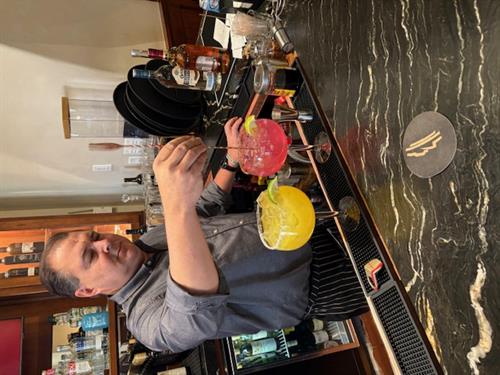
At our Club, the art of wine is practically a love language. From bold reds to crisp whites, the world of wine has long held a celebrated place at our table. But we also know that many of our members appreciate the ritual of a well-crafted cocktail. The clink of ice in crystal, the balance of spirit and citrus, the flourish of a perfectly expressed peel. There’s an artistry to mixology that rivals any sommelier’s expertise, and it deserves its moment in the spotlight.
Today, we turn our attention from the vineyard to the bar cart, exploring the craft, creativity and elevated experience of a truly exceptional cocktail. Mixology is the art and science of crafting cocktails, focusing on the flavor, balance and technique behind mixed drinks. It involves studying ingredients, history and innovative methods—such as molecular techniques or specialized garnishes—to create unique, high-quality and visually appealing beverages.
At its heart, mixology is more than just making a great drink. It’s the thoughtful intersection of chemistry, history and craftsmanship. While the roles can be intertwined, there are differences between a bartender and a mixologist. Let’s look at a quick example:
You sit down at a bar and order a margarita. A bartender will know exactly the right ingredients and ratios to make the drink. A mixologist may take it a step further, with a deep understanding of why the ingredients work well together, why the ratios are so important, what it takes to create a balanced drink and even the history behind the libation. Mixologists are more likely to add more flair to their cocktails, with specialty flavors and garnishes. In this example, a bartender may pour you a perfect, classic margarita while the mixologist presents you with a lavender-smoked margarita with a dehydrated lime wedge.
If you enjoy a good cocktail, you likely don’t need us to tell you about your favorite spirits or introduce you to a list of classic cocktails. So, in this blog, we’ll cover a few of the finer points – glass and ice.
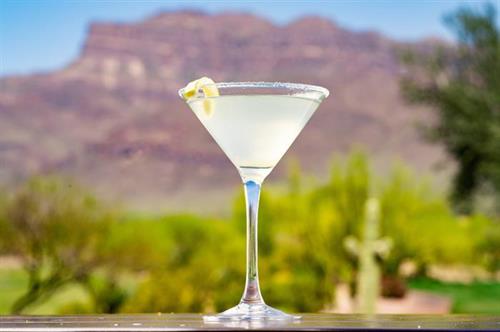
If you’ve ever sipped a martini out of Red Solo Cup, you’ll understand when we say that glassware matters. Even if we take plastic out of the equation, the specific shape and thickness of a glass can impact the aeration and temperature of a drink.
Stemmed glasses are typically used to control temperature as holding onto the stem stops heat from your hands from warming the drink. This is especially important for drinks that are served up, without ice, like martinis. Alternatively, heavy rocks glasses are meant to insulate the drink and prevent the ice from melting too quickly.
Aeration, or how much air is incorporated into your drink, is important since about 80% of flavor is actually smell. The opening of a glass dictates how much oxygen hits the spirit and how the aromas reach your nose. Tapered rims like those in a snifter narrow at the top to trap the complex vapors of spirits like scotch or cognac so you get the full aromatic experience before you take a sip. Conversely, wide bowl glasses like a margarita glass allows the scents to spread, making the drink feel refreshing rather than overwhelming.
For drinks with carbonation, like a gin and tonic or a French 75, the glass shape preserves the fizz. Narrow and tall glasses like flutes and highballs have a small surface area at the top. This prevents the carbonation from escaping too quickly, keeping your drink from going flat.
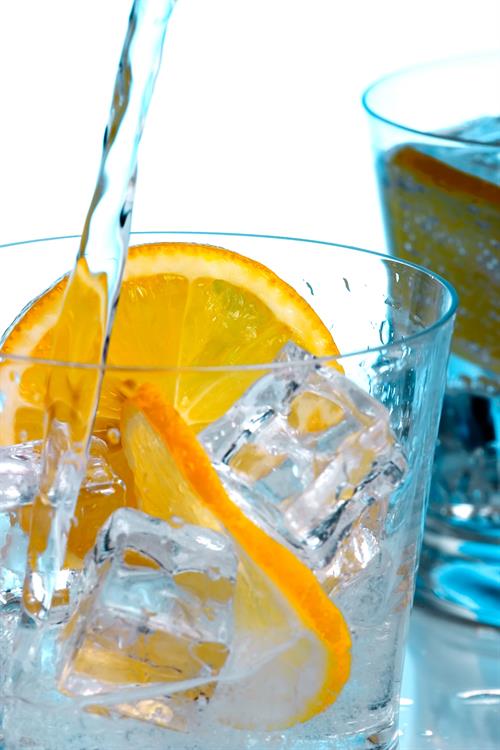
When it comes to ice, size matters. Dilution is the enemy of a perfectly crafted cocktail which is why many call for large format spheres or cubes with less surface area than pebble or crushed ice which melts significantly faster. After size and shape, the next question is: shaken or stirred? Typically, a spirit-forward drink like a martini or Manhattan is stirred to mix and chill while maintaining the integrity of the ingredients. Drinks with citrus or sugar are shaken to more vigorously combine the ingredients and introduce air/extra effervescence to enhance the flavor. Shaking can also work to add a little water to the drink for instances when a bit of dilution is a good thing. As the ice cubes slam against the side of a metal shaker, they break into smaller shards with more surface area, which means they melt and chill the drink much faster than stirring does.
That means that technically 007 got it wrong when asking for his martini shaken, not stirred. We can only guess the super spy wanted to stay sharp with a super chilled cocktail that’s slightly less potent than the stirred version.
Our very own bar master, Mike Tipton has shared a few of his favorite recipes over the years including a margarita recipe (spoiler alert – the magic is in the prickly pear syrup) and his blackberry whiskey sour.
Whether you’re looking to toast a successful round or simply want to unwind with a perfectly mixed cocktail, we invite members to stop by the clubhouse and let Mike and the team craft your favorite drink with the precision and care it deserves. We’ll have a glass waiting for you.